

Where Generations Meet: Inside Gilchrist’s Gen2Gen Volunteer Program

On a quiet afternoon in a senior living community, a teenager sits beside an older adult, listening as she talks about the blanket spread across her bed. It’s thick, hand-stitched, and familiar. “I made it myself,” the woman says. The teen pauses, surprised not by the statement, but by how much there still is to learn about someone whose life she’s only just begun to know.
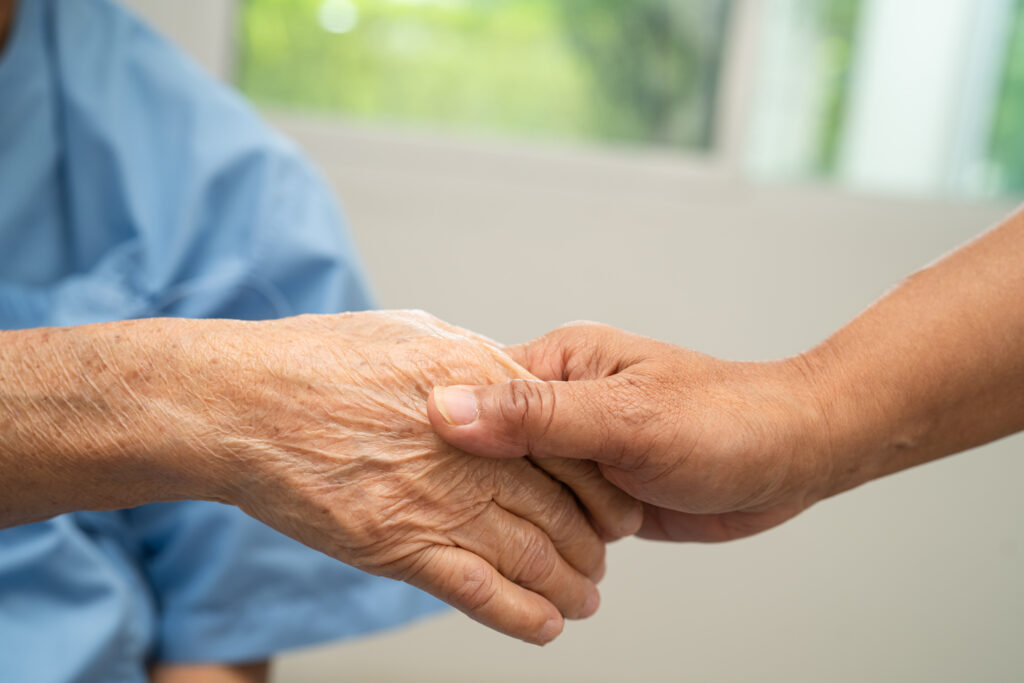
Moments like this are at the heart of Gen2Gen (Generation to Generation), a newer volunteer initiative at Gilchrist that pairs high school students with experienced adult volunteer mentors to visit older adults receiving hospice care. The goal is simple and quietly ambitious: to create genuine human connection across generations at a time when it matters most.
As Maryland’s leading nonprofit provider of serious illness, hospice, and grief support, Gilchrist has long emphasized whole-person care. Gen2Gen adds a new layer to that mission, forming what staff describe as a three-generation model of care that brings together the energy of youth, the steadiness of seasoned volunteers, and the lived experience of elders.
Seeing Hospice Through New Eyes

Priya Bakshi, a junior at Wilde Lake High School, is one of the program’s first teen volunteers. She came to Gen2Gen through her mother, Dahra Bakshi, who volunteers with Gilchrist, providing patients with companionship and sharing music as a trained Indian classical musician. While Priya was introduced to Gilchrist through her mother’s service, her motivation runs deeper. “My grandfather has been dealing with cancer for most of my life,” Priya shares. “I’ve seen the hospital side of it, and now he’s on hospice. I’ve seen what it looks like for caregivers, too, especially my grandmother. Volunteering with Gilchrist wasn’t just about logging hours. It felt personal.”
Through Gen2Gen, Priya visits residents at a senior living community alongside her adult mentor, Natalie, a longtime Gilchrist volunteer. The experience, she says, is different from what people often imagine hospice to be. “It can be sad, yes,” she says, “But it’s also meaningful. You’re not there to fix anything. You’re just there to listen, to talk, to be present. That matters more than people realize.”
What’s stayed with her most are the stories, often unexpected ones. A conversation about hobbies turns into a glimpse of a life shaped by creativity, resilience, and memory. “You see the diagnosis first,” Priya says, “but then you get to know the person. That shift has been really important for me.”
Mentorship and Meaning
According to Emily Carver, Volunteer Services Administrative Coordinator at Gilchrist, that shift is exactly what Gen2Gen is designed to foster. “Each teen is paired with an experienced adult mentor,” Emily explains. “They’re never thrown in alone. The mentor helps guide those early visits, models how to engage, and provides support as teens build confidence.”
Right now, about five teens are active in the program, visiting residents at senior living communities, including Lorien, FutureCare Turf Valley, and Edenwald. As a newer initiative, Gen2Gen is still growing, and recruitment is a priority.
Teens earn service hours through the program, and mentors can provide meaningful references for college applications. But Emily is quick to point out that the impact goes far beyond resumes. “These students are learning how to sit with discomfort, how to listen without trying to solve,” she shares. “They’re developing empathy in a very real way. That’s not something you forget.”
For teens who may be unsure about joining, Priya offers reassurance. She admits she was nervous at first, unsure of what hospice volunteering would feel like or whether she would say the right thing. But that uncertainty faded quickly. “It really builds your character. It teaches you empathy in a way that’s hard to explain unless you experience it. If you’re even thinking about it, I’d say try it. You might be surprised by how meaningful it becomes.”
In December, the program held its first virtual gathering: a Zoom-based sharing circle where teen volunteers came together to reflect on their experiences. Guided by members of the Gilchrist team, the conversation gave teens space to process what they were seeing and feeling, and to learn from one another.
Recognition Beyond Gilchrist
Though still in its early stages, Gen2Gen is already drawing attention beyond Gilchrist. The program has been invited to present at the 2nd Biennial Mid-Atlantic Intergenerational Conference, taking place June 3–5, 2026, at Stockton University in Atlantic City, New Jersey. The presentation will explore how intergenerational hospice volunteering can build compassion, connection, and community; lessons shaped directly by the experiences of teens like Priya.
More Than a Diagnosis
For Priya, the value of Gen2Gen comes down to a simple yet often-overlooked truth. “People think hospice is only about illness and dying,” she reflects. “But these are people who’ve lived full lives. They have stories, personalities, and opinions. Being sick doesn’t erase that. Programs like this remind them, and us, that they’re people first.”
Gilchrist hopes to continue expanding Gen2Gen, reaching more schools, more students, and more senior living communities. For teens who are curious, compassionate, and willing to listen, the program offers something rare: a chance to slow down, connect across generations, and discover how much meaning can be found in simply showing up.
To learn more about Gen2Gen or how to apply, visit gilchristcares.org/volunteer.