

Three Milestones, One Mission: Celebrating the Anniversaries of Gilchrist’s Care Centers
For more than 30 years, Gilchrist has been Maryland’s leading nonprofit provider of serious illness and end-of-life care. Through geriatric, palliative, hospice, and grief care, along with specialized support programs, Gilchrist helps patients and families live every moment to its fullest. At the heart of everything it does is a commitment to compassionate, expert care that supports each person’s medical, emotional, social, and spiritual needs with comfort and dignity. That commitment has been made possible through the generosity of donors, volunteers, and community partners who have helped ensure that every patient receives compassionate care, regardless of their ability to pay.
This year, as Gilchrist celebrates the 30th anniversary of Gilchrist Center Towson, the 15th anniversary of Gilchrist Center Howard County, and the 5th anniversary of William L. and Victorine Q. Adams Gilchrist Center Baltimore, these milestones represent far more than years on a calendar. They celebrate the patients and families whose lives have been touched, the dedicated staff, volunteers, and donors who have made that care possible, and a mission that has remained unchanged for more than three decades. Although each center has its own unique story, together they are chapters in one remarkable journey of compassionate care—one that continues because of the generosity of a community committed to ensuring everyone has access to expert end-of-life care when they need it most.
A Vision Takes Root
The story of Gilchrist began long before its first care center opened. Although hospice care had been growing across the country for decades, many families in Greater Baltimore still had limited access to compassionate end-of-life care in a peaceful, home-like setting.
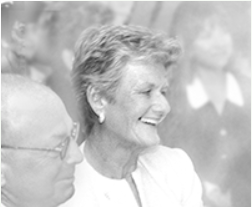
Recognizing that need was philanthropist Jeanne “Jinny” Gilchrist Vance. Inspired by her volunteer work with hospices in Florida and driven by a lifelong passion for helping others, Jinny envisioned a place where people at the end of life could receive expert medical care surrounded by comfort, dignity, and compassion. Believing that no one should die alone and that every person deserved compassionate care during life’s final chapter, she made a transformational pledge in 1991 that provided the philanthropic foundation for Hospice of Baltimore and ultimately made Gilchrist possible.
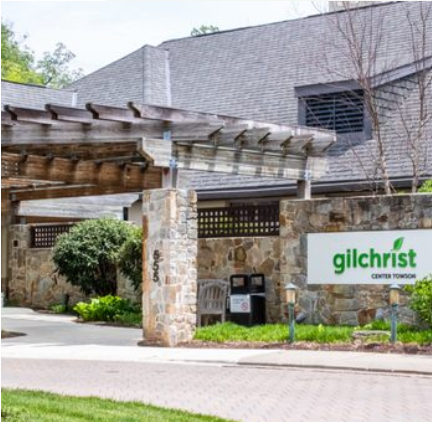
That vision became reality when Hospice of Baltimore began serving patients in 1994. Two years later, Gilchrist Center Towson opened as the region’s first freestanding inpatient hospice center, fulfilling Jinny’s dream of creating a peaceful “home away from home” for patients and families. As she said at the time, “The most important goal for Gilchrist Center is to ease pain and suffering—to provide compassionate care. I know the dedicated staff will fulfill that goal every day.”
Jinny passed away in 2003 at the age of 68, but her vision lives on in every patient cared for, every family supported, and every life touched by Gilchrist. More than three decades after her extraordinary act of philanthropy helped launch the organization, her legacy serves as a powerful reminder of how one person’s generosity can transform a community for generations.
The Center That Set the Standard
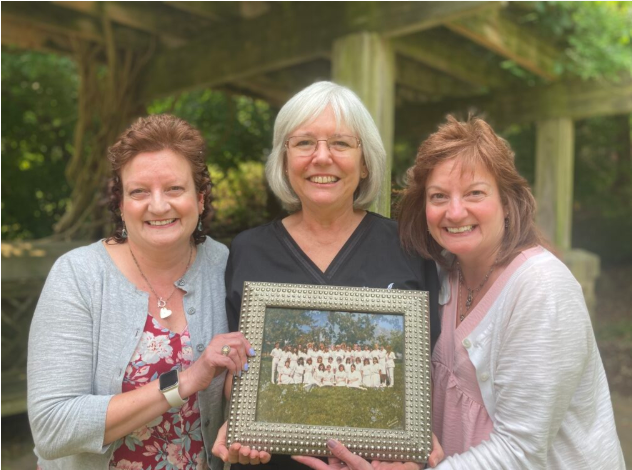
When Gilchrist Center Towson opened in 1996 as a 24-bed hospice care center, it became the region’s first freestanding hospice facility and established a new model for compassionate end-of-life care. Clinical Managers Gina Ranieri-Bender and Tina Maggio have been part of that story almost from the very beginning. Both joined the center in November 1996 after working together in GBMC’s Medical Intensive Care Unit, just months after Towson welcomed its first patients.
In its earliest years, Towson cared not only for patients receiving symptom management but also for residential hospice and respite patients, many of whom stayed for months rather than days. The center also developed a reputation for accepting medically complex hospice patients, including those with tracheostomies, patients receiving total parenteral nutrition (TPN), and those undergoing ventilator withdrawal—care that many hospice programs at the time were unable to provide. Guided by Dr. Tony Riley’s compassionate philosophy, the team focused not only on caring for patients but also on helping families navigate one of life’s most difficult transitions. “We were here to support family members and help them understand what was going to happen next,” Gina recalls.
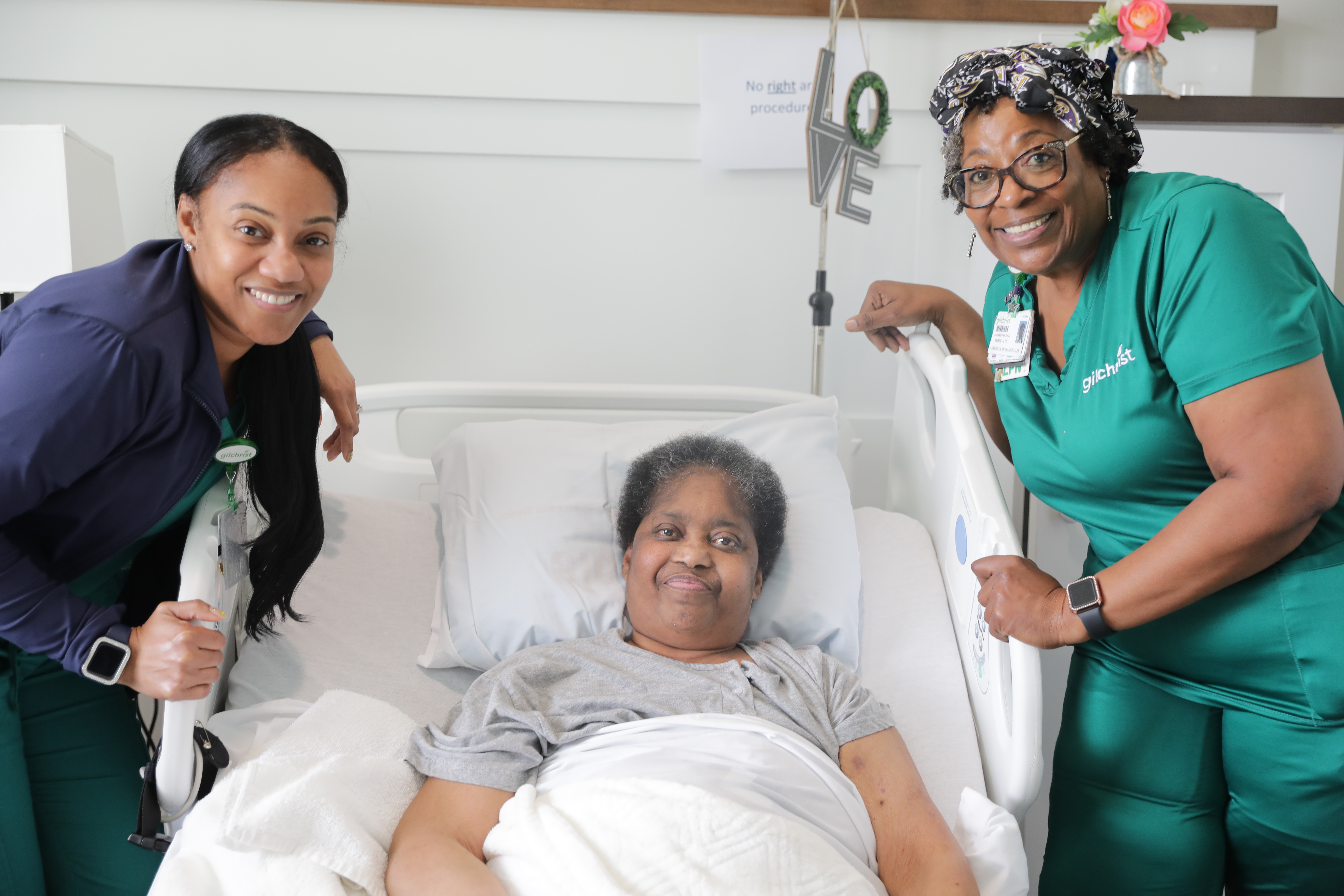
From the beginning, Towson was intentionally designed to feel like a home rather than a hospital, a philosophy that continues to shape the patient and family experience today. “We make it as much of a home-like environment as possible rather than a hospital,” Tina says. That philosophy comes to life in countless ways. Staff regularly wheel patients outside to enjoy fresh air, welcome beloved pets to curl up beside their owners, and help families create meaningful memories together. “We’ll push whole beds outside if someone wants to be outside,” Gina says. “If pets can come in from home, they can get in bed with their loved ones.”
Over the years, the center has hosted weddings, birthday parties, concerts, and even visits from Orioles birds. Volunteers fill the halls with the aroma of homemade cookies, while music therapists, end-of-life doulas, pet therapy volunteers, and the Honoring Our Veterans program provide comfort beyond medical care. Donor support has helped create the Jewish Meditation Room, expanded family gathering spaces, legacy programs, blanket warmers, and countless other touches that make Towson feel less like a healthcare facility and more like home. “The cookies are a staple here,” Tina shares with a smile. “It smells good, and family members love that. We make it as much of a home-like environment as possible rather than a hospital.”
Throughout three decades of growth, including the expansion from 24 to 34 inpatient beds in 2009, one thing has remained unchanged: every patient is welcomed with dignity and compassion. “We don’t judge people,” Gina says. “It doesn’t matter if someone has money. We’re still going to provide care.”
Growing Alongside the Community
As demand for hospice care increased, so did Gilchrist. In 1997, Hospice of Baltimore merged with Hospice Services of Howard County, expanding care throughout Central Maryland. The Endowment for Charitable Care followed in 1998, ensuring that financial circumstances would never prevent someone from receiving compassionate hospice care.
Throughout the next decade, Gilchrist continued to grow in both size and scope. The organization earned its first perfect accreditation score from the Joint Commission in 2001, reflecting its commitment to exceptional quality of care. In 2008, Hospice of Baltimore was renamed Gilchrist Hospice Care in honor of founding benefactor Jeanne “Jinny” Gilchrist Vance, whose vision had made the organization possible.
The following year marked another period of tremendous growth. Gilchrist partnered with Nkoaranga Lutheran Hospital’s hospice and palliative care program in Tanzania, extending its mission across the globe. The organization also opened its corporate headquarters in Hunt Valley, creating space to support its growing team and expanding services.
Growth continued in 2010 with the launch of Gilchrist Kids, which quickly became a model for pediatric and perinatal hospice care throughout Maryland. That same year, Gilchrist brought geriatric medicine and palliative care under its leadership, marking its first major expansion beyond traditional hospice services and laying the foundation for the comprehensive continuum of care it provides today. In 2011, Gilchrist received the prestigious Circle of Life Award from the American Hospital Association in recognition of its integrated model of hospice, palliative, and geriatric care. Despite all of that growth, Gina Ranieri-Bender and Tina Maggio say one thing has never changed. “We always try to meet the patient and the family where they are.”
Bringing Care Closer to Home
Gilchrist’s roots in Howard County stretch back decades. In 1977, local volunteers began exploring the creation of a hospice program to serve their community. What started as Omega, Inc. evolved into Hospice Services of Howard County before merging with Hospice of Baltimore in 1997. Building on that legacy, Gilchrist Center Howard County opened in Columbia in 2011 as a 10-bed hospice care center, giving families access to compassionate end-of-life care closer to home.
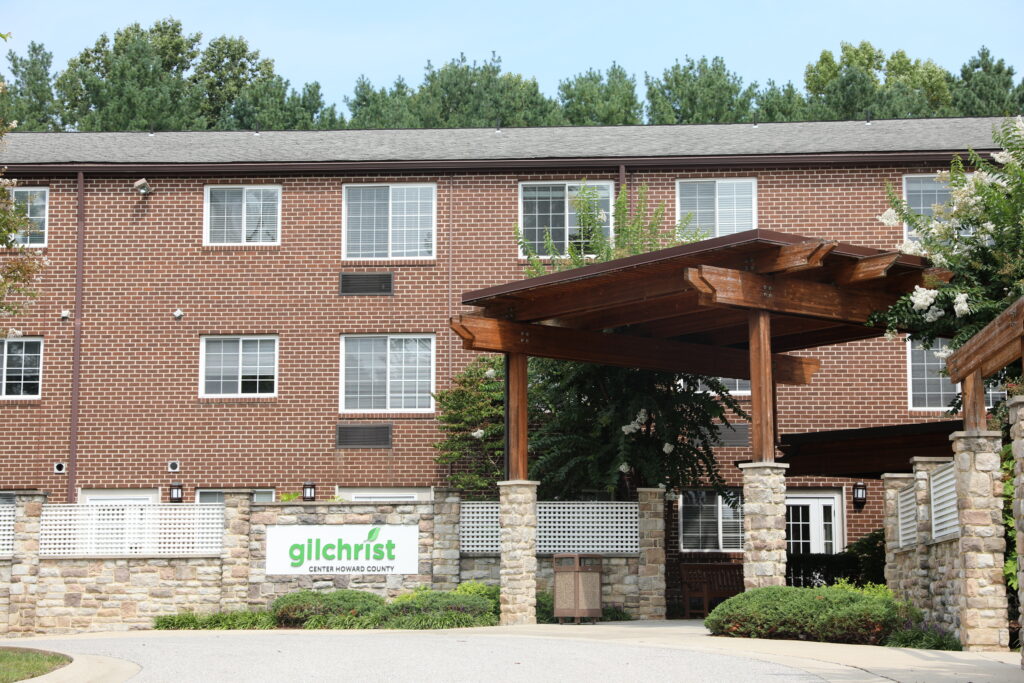
Clinical Social Worker Blair Wilson has witnessed nearly every chapter of that journey. After spending 11 years caring for patients through Gilchrist’s Howard County home hospice team, she joined the new inpatient center when it opened. “It was very exciting knowing we were going to have a facility here and how helpful that would be to the Howard County community,” Blair remembers. One of her favorite memories came just before the center officially opened, when one of her Howard County patients at Gilchrist Center Towson became one of the first patients transferred to the new center. “They were so grateful not to have to make that drive from Howard County to Towson,” she recalls. “It was really early evidence of the benefit.”
For Blair, Howard County has always been more than just a workplace. Having lived in and around the community for much of her life, she finds caring for patients there deeply personal. “This center has felt like home to me,” she says. “It’s personal because Howard County and Columbia have been such a part of my life for so many years. I appreciate being here to help those in need here.”
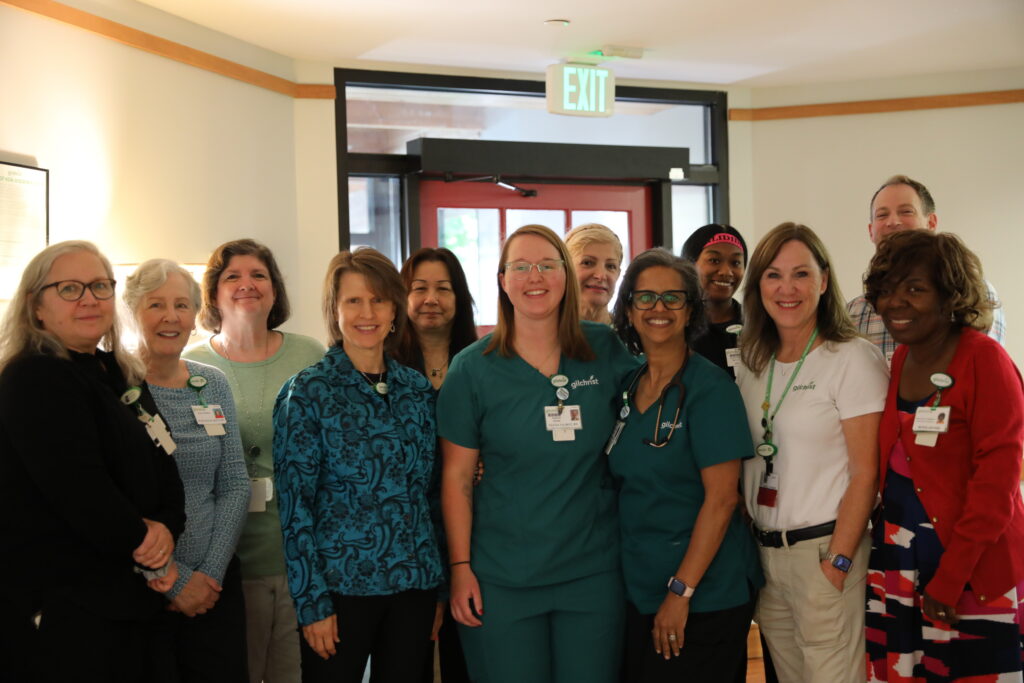
She believes the center’s smaller size is one of its greatest strengths, creating an atmosphere that feels welcoming from the moment families arrive. “People will share that it feels so different from the hospital—so peaceful, so relaxing. It’s just an inviting environment for people who have just been through a very difficult journey.” That atmosphere begins with the people who work there. “This team is amazing. It always has been amazing,” Blair says. “I think our patients and families feel well loved, well cared for, and well supported.”
Fifteen years after opening its doors, Gilchrist Center Howard County continues to fulfill the vision that inspired its creation: providing expert hospice care close to home, where patients and families can find comfort, compassion, and support when they need it most.
Carrying Forward a Legacy in Baltimore
The story of Gilchrist Center Baltimore began long before it opened its doors at Stadium Place. Founded as Joseph Richey House in 1987, it became Maryland’s first residential hospice and, for more than three decades, provided compassionate end-of-life care to Baltimore City’s most vulnerable residents, including people experiencing homelessness, those living with HIV/AIDS, and others who often had nowhere else to turn. Patients were welcomed regardless of their ability to pay, making dignity and compassion the foundation of its mission.
In 2014, Joseph Richey joined forces with Gilchrist, preserving its extraordinary legacy while strengthening its future. Few people know that story better than Catherine Frome, Director of Community Programs and Partnerships. Catherine’s own journey began as a teenager stuffing fundraising envelopes alongside her mother before becoming a receptionist, admissions coordinator, nurse, nurse leader, interim executive director of Joseph Richey House, and ultimately one of the leaders who helped guide the merger. When asked why Gilchrist was chosen, Catherine’s answer is simple. “Gilchrist was the most aligned with our mission, our vision, and our values.”
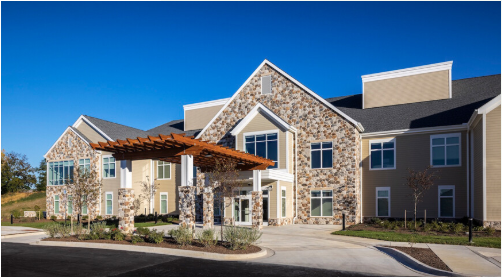
Following the merger, Catherine helped oversee every aspect of planning for the new William L. and Victorine Q. Adams Gilchrist Center Baltimore, from designing patient rooms and selecting finishes to developing staffing plans and preparing for the move. In December 2021, patients were welcomed into the new 22-bed hospice center at Stadium Place, creating a beautiful, purpose-built home while preserving the mission that had defined Joseph Richey House for decades. The move also created a space intentionally designed around the needs of patients and families. Kourtney Hallett, Health Information Management Specialist at Gilchrist Center Baltimore, says the center was built to offer comfort from the moment someone walks through the doors. “What makes Gilchrist Center Baltimore different from other healthcare settings in the city is that we try to make it feel less like a hospital and more like a homey feeling for patients who are at the end of life,” she says.
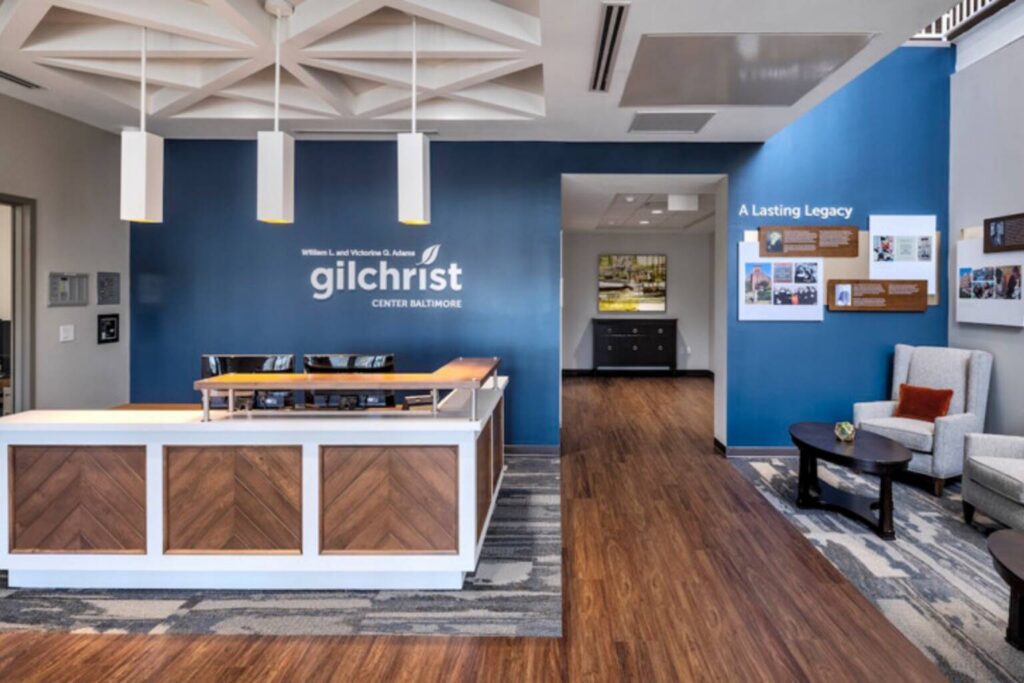
Looking back, Catherine says the accomplishment she is most proud of wasn’t constructing a new building—it was protecting the organization’s heart. “I’m most proud that we successfully navigated the merger and acquisition while keeping the mission and vision exactly as we intended them to be. That has never wavered.”
Today, that mission continues to thrive. The center remains dedicated to serving Baltimore City’s most vulnerable residents, ensuring every patient receives compassionate, expert care regardless of their circumstances. “We still care for the underserved,” Catherine said. “We take care of even more underserved patients now.” For Kourtney, that compassionate spirit is what defines the center. “What I am most proud of is the continuing compassionate care that our team has continued to show to the patients and families who come through our doors every single day,” she says.
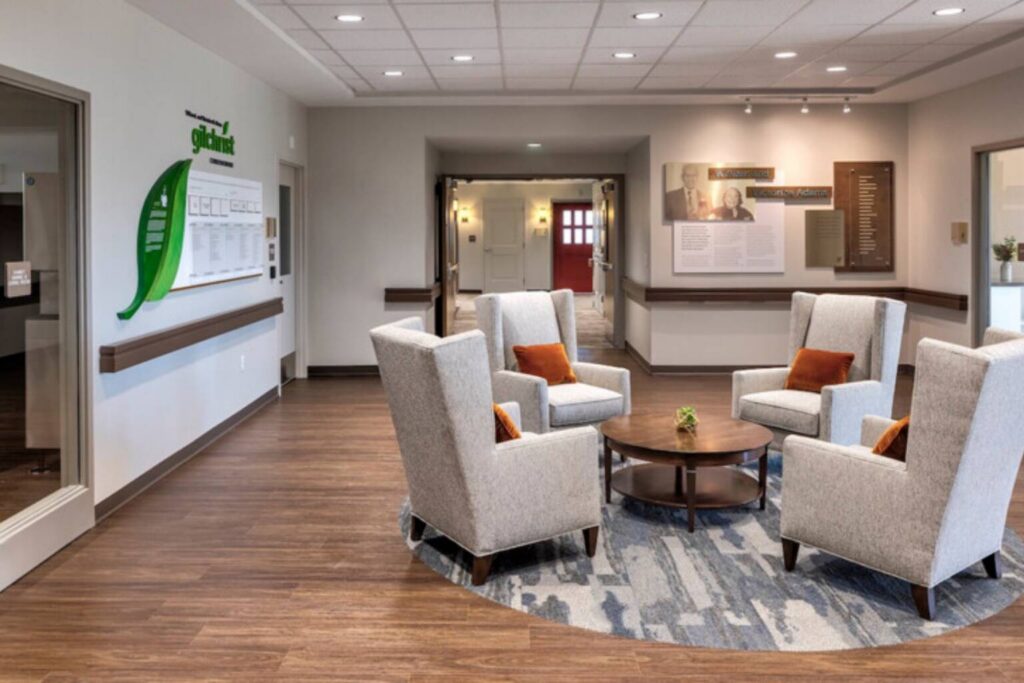
Five years after opening at Stadium Place, Gilchrist Center Baltimore continues to build on the legacy of Joseph Richey House while looking toward the future. Kourtney hopes that future includes not only exceptional care, but greater awareness of hospice throughout the community. “What I hope for the next five, ten, or twenty years is that we continue to expand education for families and the community while still maintaining all the love we all put into our jobs every day to provide the most amazing care we can for all of our patients.”
More Than Buildings
Each center has evolved in its own way. Towson has expanded, welcomed new programs, and adapted through changing models of care. Howard County has become an intimate community resource serving families close to home. Baltimore has honored a remarkable legacy while providing a new home for one of the city’s most vulnerable populations.
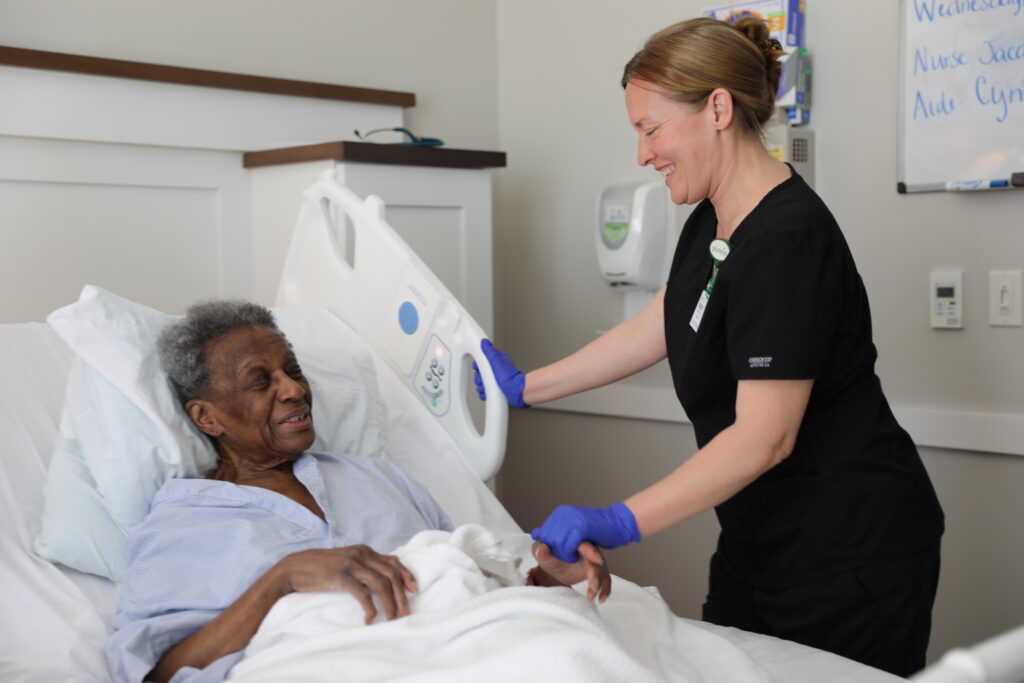
Together, they have weathered changing healthcare landscapes, earned national recognition, launched groundbreaking programs, including Gilchrist Kids, Honoring Our Veterans, Music Therapy, End-of-Life Doulas, Geriatric Medical Care, and Palliative Care, navigated the challenges of the COVID-19 pandemic, and continually expanded care to meet the community’s changing needs. Through it all, one promise has remained constant: every patient deserves compassionate, expert care, regardless of their diagnosis, background, or ability to pay.
Yet those who have been part of the journey say the heart of Gilchrist has remained remarkably consistent. “I think our patients and families feel well loved, well cared for, and well supported,” Blair says. Gina and Tina share that same hope for the future. “I just hope we continue providing the care we’ve always provided.” For Catherine, the lesson extends beyond hospice itself. “You never know what people are going through. There is always a worst-case scenario that we can imagine. We should just be good to each other.”
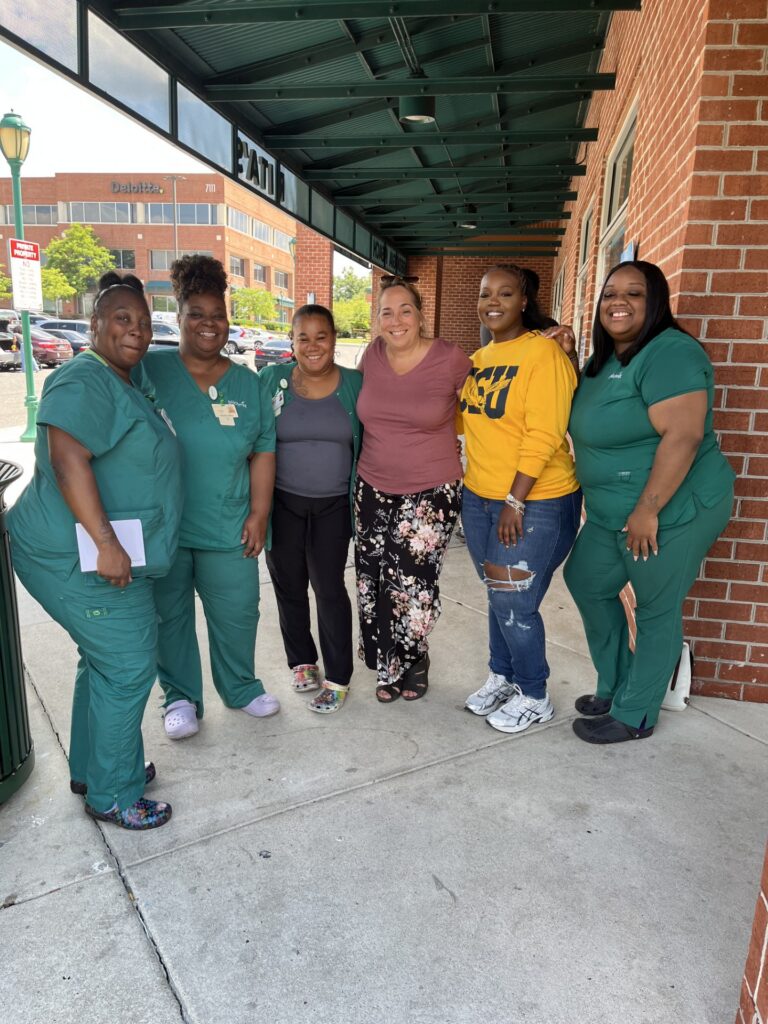
As Gilchrist celebrates these milestones, the anniversaries serve as more than markers of time. They celebrate thousands of patients whose lives have been touched, families who found comfort during life’s hardest moments, and generations of employees, volunteers, and donors whose compassion has shaped the organization for more than three decades.
From Jeanne “Jinny” Gilchrist Vance’s transformational philanthropy that helped launch Hospice of Baltimore to the countless donors whose generosity has funded new centers, innovative programs, family spaces, and services beyond what insurance covers, philanthropy has been at the heart of Gilchrist’s story from the very beginning. It is because of that generosity that Gilchrist can continue providing compassionate, expert care to every patient who needs it, regardless of their ability to pay.
As Gilchrist looks to the future, the need for that generosity continues. Every gift helps ensure that patients and families facing serious illness receive the comfort, dignity, and support they deserve. To help make that possible for future generations, please consider making a gift.
Because while buildings grow, programs expand, and healthcare evolves, the reason Gilchrist exists has never changed: helping every person live life to the fullest while ensuring that no patient or family walks the journey alone.