

Capturing Treasured Legacies Through Gilchrist’s Memory Bear and Pillow Legacy Program
Sometimes grief shows up in ways words cannot hold. A flannel shirt still hanging in the closet. A favorite tie tucked in a drawer. A T-shirt that still smells faintly like the person who wore it.
Gilchrist’s Memory Bear and Pillow Legacy Program helps families transform meaningful clothing items into keepsakes they can hold close: handcrafted bears and comforting pillows made from a loved one’s garments. Offered to all Gilchrist hospice patients and their families, the program provides a gentle, creative way to preserve memories. For many families, these pieces become a steady source of comfort, offering a tangible connection to someone they miss deeply.
A Program Built from Creativity and Care

Although the Memory Bear and Pillow Legacy Program feels like it has long been part of Gilchrist, it was formally shaped just three years ago, guided in large part by Mary Bova, Gilchrist’s Donor Services Coordinator, whose background in theater costuming brought both technical skill and creative vision to the program’s early development. Drawing on decades of sewing experience, Mary helped establish the processes that would allow meaningful clothing items to be thoughtfully transformed into bears and pillows, while also helping build a program designed to honor each family’s story with patience and care.
As interest in the program grew, Mary’s role quickly expanded beyond the sewing itself. She became the central point of coordination, receiving clothing, organizing requests, sourcing specialized materials, and ensuring that each item was matched with a volunteer sewist equipped to take it on. She also refined patterns, identified techniques for working with modern fabrics, and created systems that allow the program to function smoothly on a volunteer basis.
Today, Mary continues to serve as the program’s anchor. She supports and mentors volunteer sewists, answers questions in real time, shares tips and improvements across the group, and problem-solves when a project presents unique challenges. Her behind-the-scenes work ensures consistency, quality, and care, while allowing volunteers the creative space to design each bear or pillow with intention.
When Grief Needs Something to Hold Onto
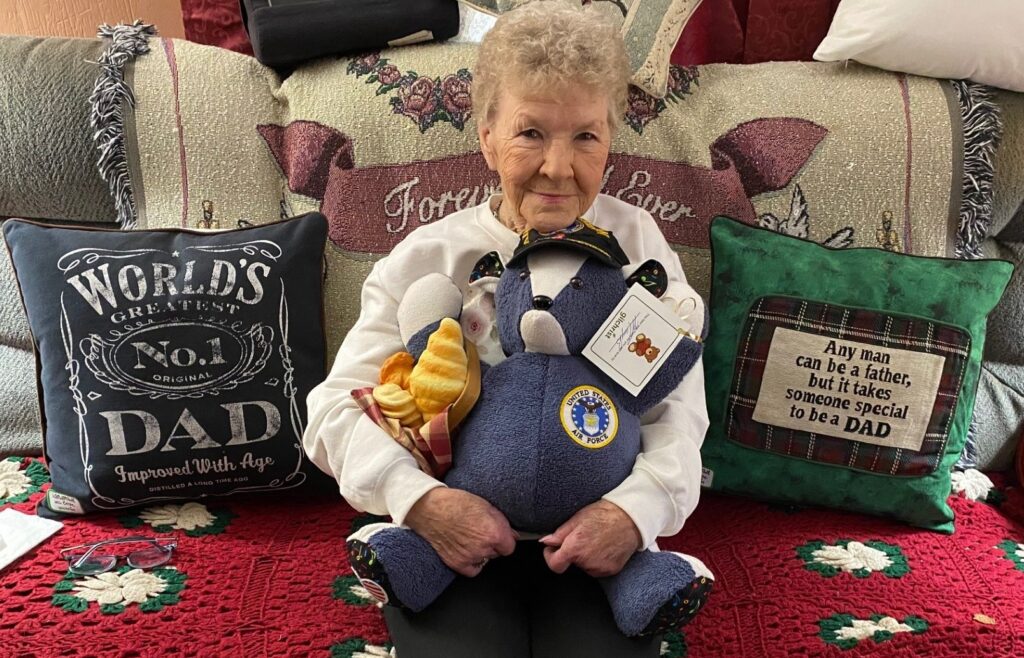
As grief counselor, Allie Wolfing, has seen time and again that these keepsakes matter because they give the bereaved something physical to connect with when emotions are too layered for language. In grief work, Allie often describes memory bears as a “transitional object,” a term used to describe an item that provides comfort and emotional safety while someone adjusts to a major change or loss. In practice, it means the bear becomes a bridge: between then and now, between absence and love that still feels present.
When Allie delivers a finished bear or pillow to a family, the reactions are rarely simple. She sees tears and smiles in the same breath. She hears people describe the moment as bittersweet. Often, families point to small details on the bear and begin telling stories: that shirt was his go-to for Ravens games, that tie was worn to every holiday dinner, that blouse was her favorite because of the color. In those moments, the bear becomes more than a keepsake. It becomes a doorway into remembering.
Sewing With Purpose After Loss
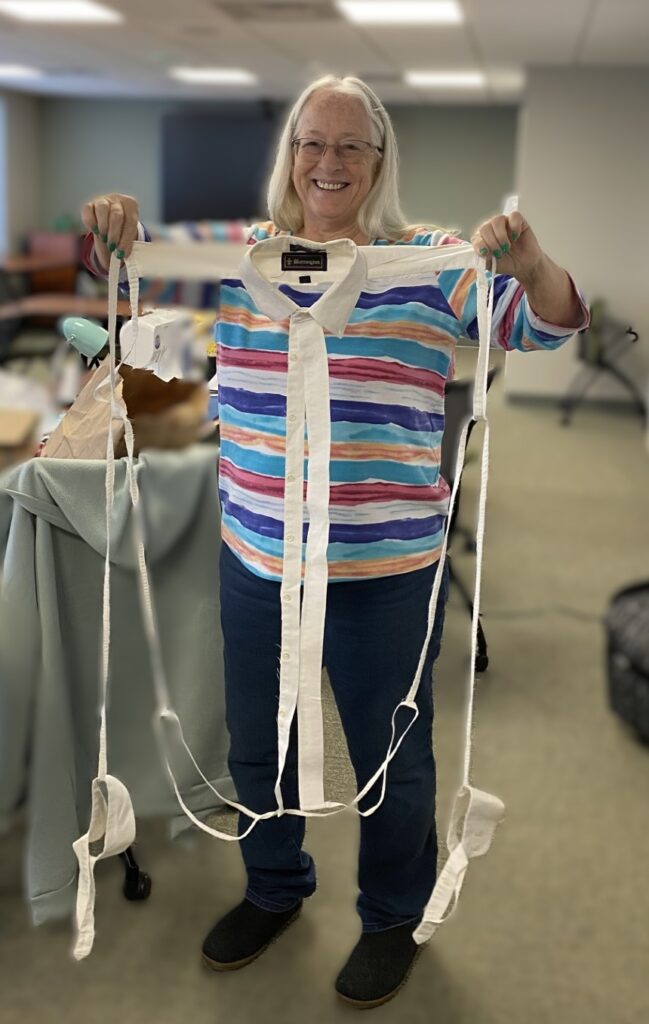
For Cheryl Harrow, the path to the Memory Bear Program grew out of a year marked by both transition and loss. After retiring in 2023 and losing her mother that same year, she was introduced to the program through her son, Gregg Harrow of Gilchrist’s marketing team, and used a pattern shared by Mary Bova to create her first memory bear from her mother’s pajamas. Cheryl, who learned to sew as a child and has spent a lifetime creating with fabric, says making that first bear showed her just how powerful these keepsakes could be and made her want to do the same for other families.
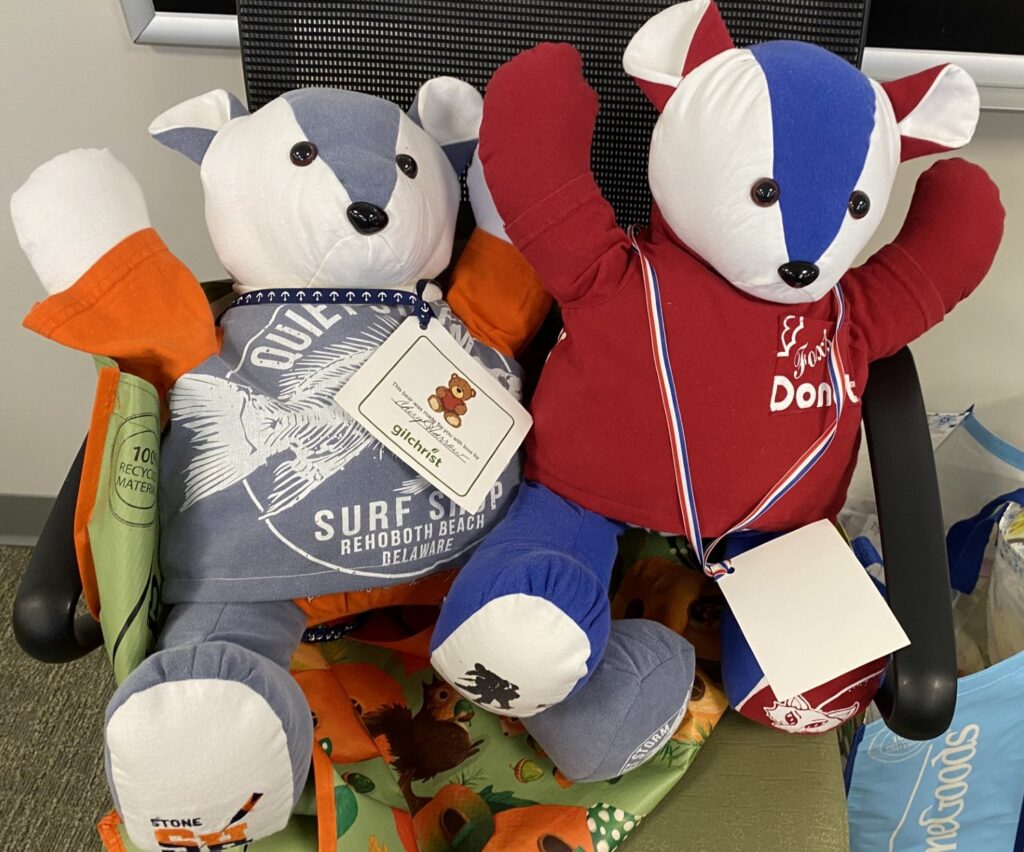
One of Cheryl’s first bears for Gilchrist was created from a collection of clothing that captured a full life in fabric: a man who wore suits to work, favored Hawaiian shirts, and never missed cheering for the Ravens. The family asked for two bears for their grandchildren, and Cheryl knew immediately what that meant: each one needed to feel just as meaningful as the other. When the bears were finished, she felt what many volunteers come to know: the quiet satisfaction of creating something deeply personal, and the certainty that the family would recognize their loved one in every stitch.
Cheryl says the support within the Memory Bear program makes that work possible. Volunteer sewists stay connected, share ideas, and lean on one another for guidance, with Mary Bova always close at hand to help troubleshoot or encourage. And in the end, what stays with her most is imagining the moment of delivery: when a family opens the bear, recognizes the fabric, and holds something that feels like comfort made visible.
The Details that Turn Fabric into a Story

One reason these bears feel so meaningful is that they often include small, personal touches—details that help families feel seen. In her grief counseling work, Allie listens for those details. She gathers them gently, the way people do when they talk about someone they miss: the phrase Dad always said, the job he once had, the tiny habit that still makes someone laugh.
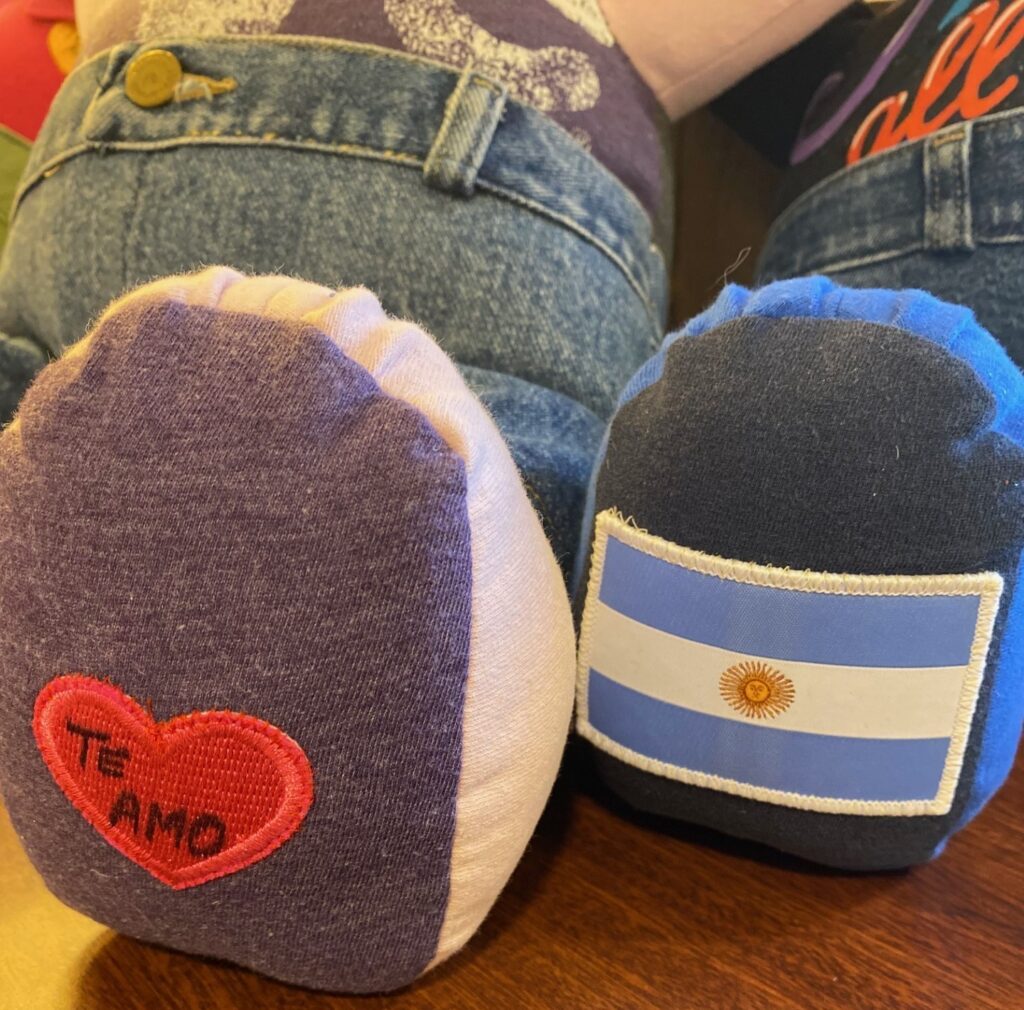
Sometimes those details shape the bear itself. Allie remembers a family sharing that their loved one often said “te amo,” and seeing that phrase incorporated into the bear in a way that felt like a quiet echo of his voice. In another case, when a family mentioned their loved one had once been a bread delivery man, Mary found a creative way to reflect that story in the finished bear. For families, it’s rarely “just a bear.” It’s a life in fabric. It’s recognition. It’s love, made visible.
Interested in Becoming a Memory Bear Volunteer?

Gilchrist’s Legacy Program is made possible entirely through volunteers. Each bear or pillow represents hours of thoughtful work, and as requests continue to grow, so does the need for skilled, compassionate sewists willing to take on this meaningful work.
While the finished bears appear simple, the process requires patience, creativity, and care. Volunteers work with donated clothing that often stretches or varies in texture, which means learning techniques to stabilize fabric and thoughtfully plan each design. Every bear is different, and that is part of what makes the work both challenging and rewarding.
For many sewists, the most difficult moment comes at the very beginning: making the first cut. Once the process starts, however, volunteers quickly discover they are not working alone. Memory Bear sewists are supported by a connected community that shares tips, problem-solves together, and offers encouragement along the way. Mary Bova remains closely involved, guiding volunteers through questions and offering support when challenges arise. Sewists do not need to be experts, but they should be comfortable using a sewing machine and open to learning new techniques. Training, guidance, and support are provided throughout the process.