

Priya’s Perspective: When Neuroscience Meets Compassion in Hospice Care
When I first started volunteering at Gilchrist, I was a little nervous. I think most people my age would be.
We’re so used to school, sports, and thinking about the future, so walking into a space focused on the end of life felt heavy. What I’ve learned, however – and what makes it much lighter than one would think – is that there is a fascinating bridge between the human heart and the human brain.
As a student, I have always been interested in how our brains work. What’s interesting is that the science of hospice is not just about medicine; it is also about connection. Here is what is happening behind the scenes in the brain, and why it makes the work we volunteers do at Gilchrist so significant.
The Last Sense to Leave

One of the most comforting things I learned during my Gilchrist training is that when a patient is no longer talking or seems “unreachable,” they are likely still with us in a very specific way. Research led by Elizabeth Blundon at the University of British Columbia found that hearing is likely the last sense to go. Using EEG to track brain waves, researchers discovered that the “dying brain” responds to sound in a way that is nearly identical to a fully conscious brain (Blundon et al., 2020).
When I’m at the bedside of a patient, I might read a book out loud or just talk about the weather. Before I knew the science, I wondered if it really mattered. I now know it does. The brain is still “listening,” even when the body has stopped responding. For me, knowing this transforms a quiet room into a space of genuine connection.
Empathy Vs. Compassion: Why We Don’t “Burn Out”
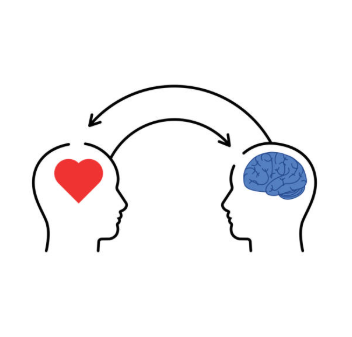
“Doesn’t it get depressing?” This is the most asked question I receive when I tell people I volunteer for hospice. I remember feeling confused when I was first asked this: volunteering actually made me feel good rather than drained. Interestingly, neuroscience has an answer for this, too.
There is a huge neurological difference between empathy and compassion. According to research published in Social Cognitive and Affective Neuroscience, empathy – literally feeling someone else’s pain – can activate the brain’s distress centers. This isn’t to argue that empathy is inherently draining; rather, if one stays in that empathetic high for long periods of time, they may experience what is known as “empathy fatigue.”
Compassion, on the other hand, is empathy plus the desire to help. This shift activates the brain’s reward systems, such as the ventral striatum, which is linked to positive feelings and resilience (Kilmecki et al.,2014). By showing up as a Gilchrist volunteer to provide comfort, my brain shifts from feeling sad to feeling a sense of purpose. It is essentially a “helper’s high” that can actually make volunteers feel more connected to the world.
Why It Matters
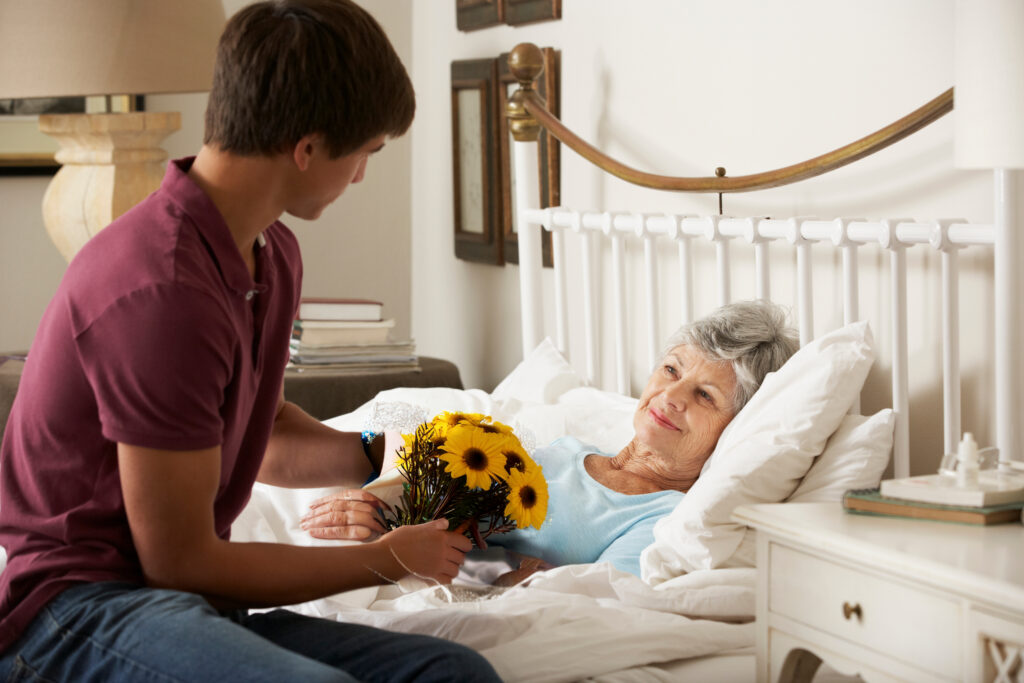
Volunteering for Gilchrist has shown me time and time again that we are not just a collection of cells; we are hardwired for each other, for connection. Whether it’s the way a patient’s brain waves react to the sound of a voice or the way my own brain feels a sense of peace after a shift, the science confirms what Gilchrist shares: that presence is powerful.
If you are someone looking for a way to make an impact – and perhaps even learn a bit about what it means to feel human along the way – I would recommend volunteering with Gilchrist. Through my experiences, I can confidently say that you wouldn’t just be helping out; you’d be participating in one of the most profound neurological and emotional experiences humans can have.
Sources:
Blundon, E. G., Gallagher, R. E., & Ward, L. M. (2020). Electrophysiological evidence of preserved hearing at the end of life. Scientific Reports.
Klimecki, O. M., et al. (2014). Differential pattern of functional brain plasticity after compassion and empathy training. Social Cognitive and Affective Neuroscience

BIO
Priya Bakshi is a junior at Wilde Lake High School and one of Gilchrist’s first Gen2Gen teen volunteers, inspired by both her mother’s service and her own family’s experience with serious illness. Through her visits with patients, Priya brings a thoughtful perspective that blends curiosity, compassion, and a deep appreciation for the power of simply being present.