

Living Beyond the Prognosis: Wyatt’s Journey with Gilchrist Kids
When Rachel and Cody Taylor were told their infant son Wyatt had a two-week prognosis, time seemed to collapse into fear, uncertainty, and a single devastating question: How do we bring our baby home?
Nearly a year later, Wyatt is still very much here, surrounded by his parents, his two big sisters, and a care team from Gilchrist Kids that Rachel now describes as family.
Meeting Wyatt
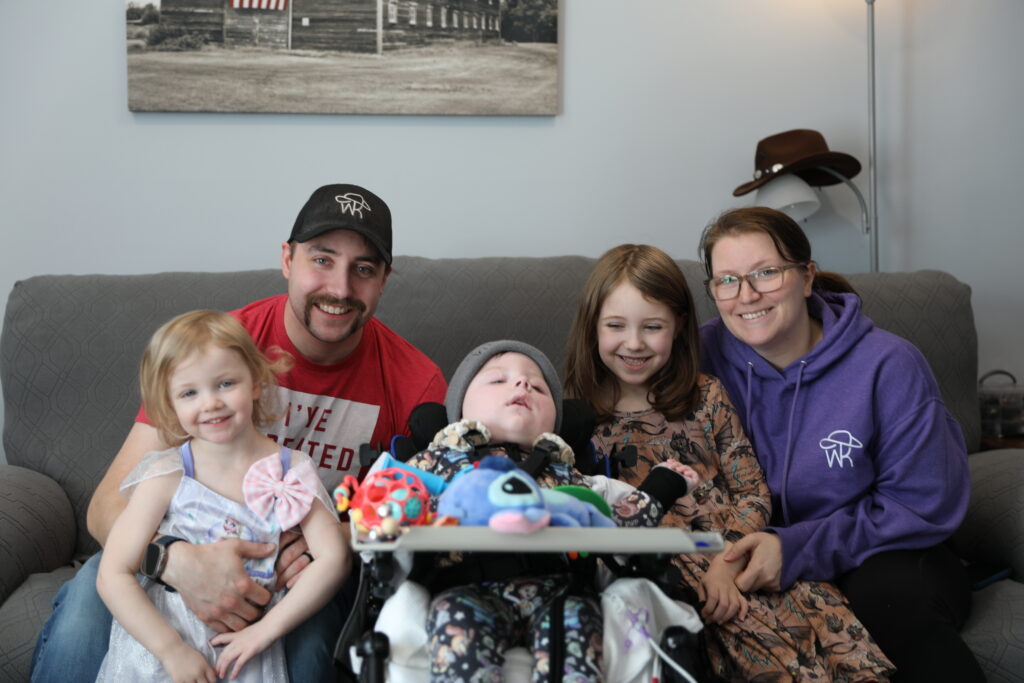
Wyatt was prenatally diagnosed with cerebellar hypoplasia on the left side—meaning part of the cerebellum, the area of the brain responsible for balance, coordination, and aspects of development, did not fully form and is smaller than typical. At birth, his MRI results were consistent with what doctors expected, and for a time, his development appeared typical. But in January 2025, everything changed. “He had what I thought looked like a seizure,” Rachel recalls. “It turned out he was having multiple strokes, which were causing the seizures.”
After weeks in the hospital, the family received the prognosis no parent is prepared to hear. Hospice was introduced—and with it, a wave of assumptions. “When they told us hospice, we thought, that’s it,” Rachel says. “We thought hospice meant two to four weeks. We didn’t even realize it could look like this.”
What Pediatric Hospice Really Means
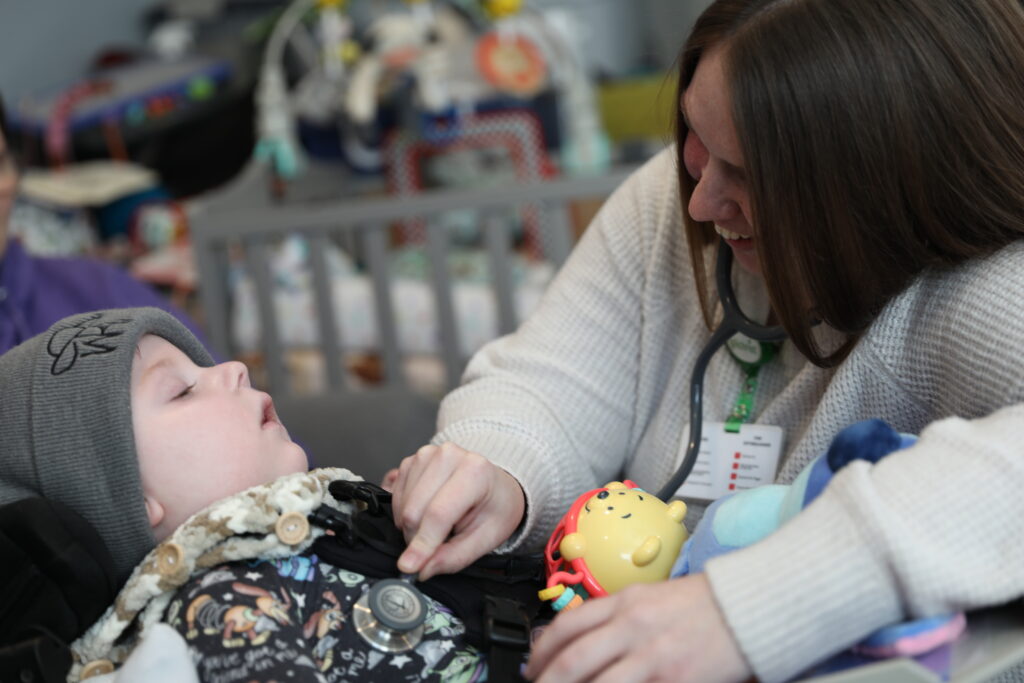
One of the most misunderstood aspects of pediatric hospice is that it means giving up on treatment. Children on the Gilchrist Kids hospice program can receive concurrent care, meaning they may continue disease-directed treatments, therapies, and specialty care alongside hospice support. This is a key difference from adult hospice care, where patients typically stop curative treatment to focus solely on comfort.
“He has concurrent care, so he’s still getting treatments,” Rachel explains. “He’s still going to physical therapy. He’s still being taken care of medically—but he’s also getting comfort care that he wouldn’t get outside of hospice.”
For Wyatt, that includes regular nursing visits, symptom management, physical therapy support, and a team focused not just on survival—but on quality of life. “I think that’s been the biggest surprise,” Rachel says. “It’s not a death sentence. It’s a comfort measure.”
Wyatt’s days follow his lead. His feeds, medications, and time in his adaptive chair are the anchors—but everything else is flexible. “Other than feeds, meds, and chair time, it’s pretty much whatever he wants to do,” Rachel says. “We work physical therapy into the day, and lately he’s been getting stronger.” He loves mirrors—especially smiling at himself. He loves Cars and Toy Story. And he adores his sisters, who proudly jump into the conversation to share his favorite songs and characters.
Support for the Whole Family
From the very beginning, Gilchrist Kids supported more than just Wyatt’s medical needs. Child Life Specialist Kyra Georgas worked closely with Wyatt’s sisters, helping them process fears and big emotions through play, activities, and consistency—even visiting grandparents’ homes when Wyatt was hospitalized so the girls could still receive support. “I’ve talked to Kyra morning and night,” Rachel says. “She’s gone above and beyond for our girls. She makes sure they have activities every single week.”
Rachel also credits Wyatt’s nurse, physician, social worker, and the on-call team for helping the family stay grounded through constant uncertainty. “I don’t think he would still be alive—or as comfortable—without hospice,” she says. “And I don’t think our family would be as strong.”
A Flight to the North Pole
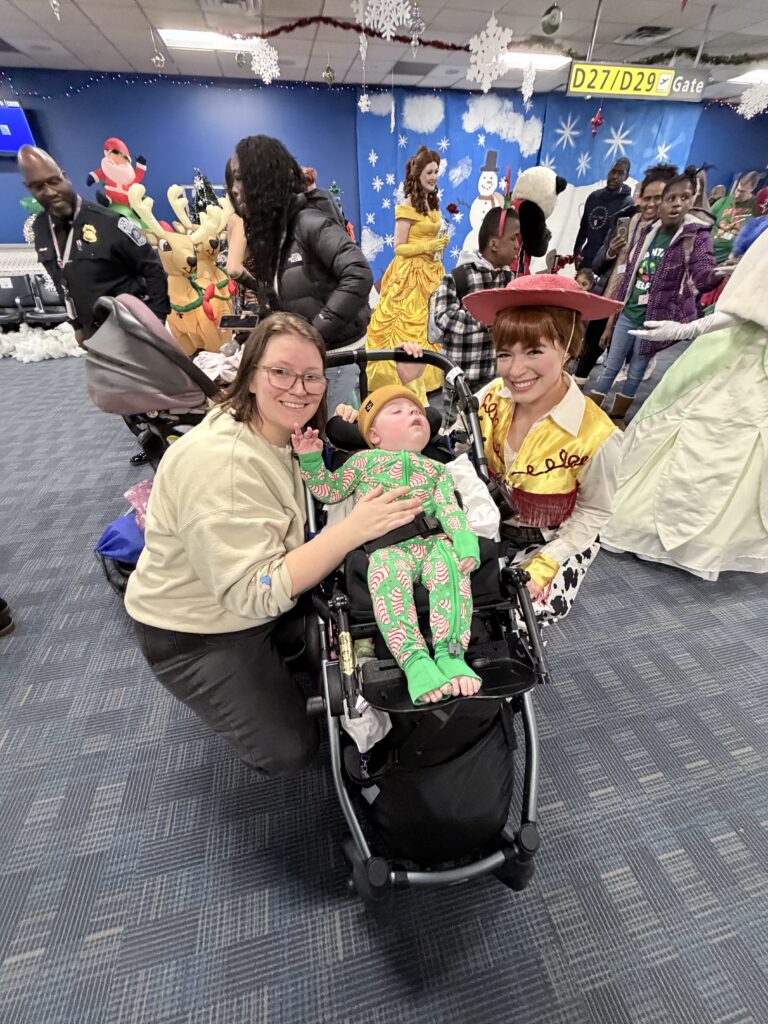
One of the most joyful moments of Wyatt’s year came through a Gilchrist Kids opportunity that Kyra offered to Wyatt and his family, called Fantasy Flight, a holiday experience created in partnership with United Airlines. Originally offered to just a handful of families, Wyatt’s family took part in the program’s very first year with Gilchrist.
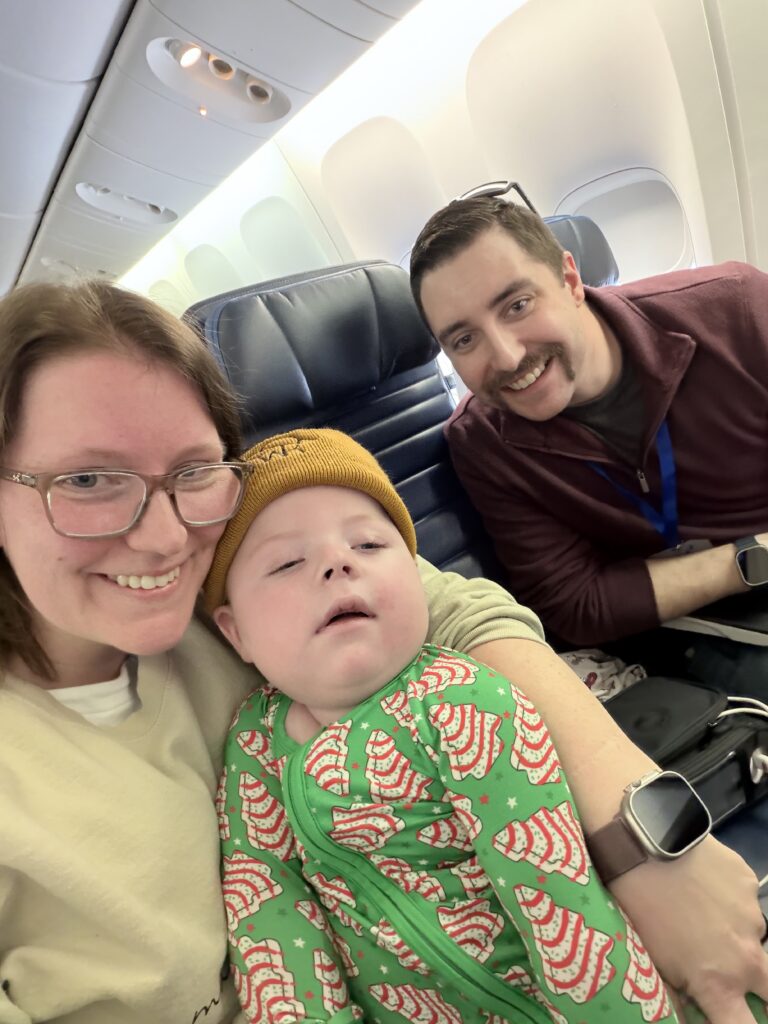
“They turned an entire gate into the North Pole,” Rachel says. “We checked in like a real flight. We got boarding passes. The plane actually took off.” Inside the aircraft, everything was decorated for Christmas. Flight attendants wore antlers. EMTs were onboard. And despite concerns about pressure changes, Wyatt remained calm—his heart rate even dropped.
“When we landed, there were elves lining the hallway,” Rachel says. “Disney characters everywhere. Elsa sang. Belle let my daughter hold her rose. The fire department brought Build-A-Bear stuffed animals for every child.” Each child left with gifts, pilot hats, and memories that Rachel says still feel unreal. “It was probably the best experience we’ve ever had.”
Redefining Hospice
As Wyatt approaches the one-year mark after receiving his prognosis, Rachel reflects on how much her understanding of hospice has changed. “We thought hospice was only about death,” she says. “But it’s comfort. It’s emotional support. It’s spiritual support. It’s support for the whole family.”
She pauses, then adds what she wishes every parent in her position could hear: “If hospice is being offered to you, accept it. Don’t be afraid. Pediatric hospice is completely different from adult hospice. Your child can still get treatments. They can still grow stronger. It’s not about giving up—it’s about living as well as possible.”
And for Wyatt and his family, that has made all the difference.
About Gilchrist Kids
Gilchrist Kids is a pediatric hospice program providing compassionate, comprehensive care for infants, children, and young adults with life-limiting illnesses. The program also offers perinatal support for parents who learn during pregnancy that their child may have an incurable condition. In addition to expert medical and comfort care, Gilchrist Kids includes child life specialists who support patients and siblings through play, imagination, and emotional guidance—helping families navigate an incredibly difficult journey together.
To learn more, visit: gilchristcares.org/kids